
The journey of bringing a child into the world is one of the most transformative physiological and emotional milestones in a woman’s life. At Rose Maternity and Children Hospital, childbirth is approached not as an illness to be managed, but as a normal, healthy, physiological process that deserves the highest standard of evidence-based medical stewardship. As a premier normal delivery hospital in Bharuch, the clinical focus centers on empowering mothers, preserving natural labor mechanisms whenever medically safe, and providing modern pharmacological relief through advanced painless delivery in Bharuch.
Under the clinical leadership of Dr. Vidya Lakshmi Kachhela, recognized among expectant families as the best doctor for normal delivery in Bharuch, our obstetrics department combines international birthing guidelines (such as those from the World Health Organization and the Royal College of Obstetricians and Gynaecologists) with an empathetic, woman-centered philosophy. This comprehensive clinical guide explores the physiology of spontaneous labor, modern pain-relief modalities (including walking epidurals), maternal safety protocols, and post-delivery care.
1. The Philosophy of Physiological Childbirth
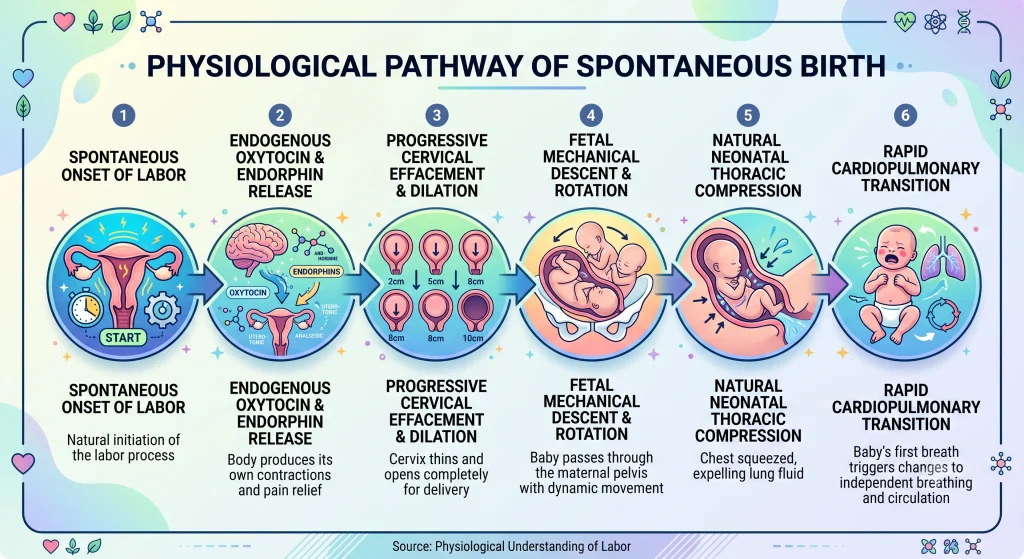
Human labor is a coordinated neuroendocrine and mechanical sequence refined over millennia. Spontaneous vaginal delivery offers profound physiological benefits for both the parturient (laboring mother) and the neonate.
Maternal Physiological Advantages
- Rapid Recovery Kinetics: Vaginal delivery avoids surgical incisions through the rectus sheath, uterine myometrium, and peritoneum. This significantly shortens hospital stays, reduces deep tissue scarring, and allows mothers to ambulate comfortably within hours after delivery.
- Decreased Thromboembolic and Infection Risks: Compared to major abdominal surgery, natural delivery lowers the risk of surgical site infections, pelvic adhesions, endometritis, and venous thromboembolism (VTE).
- Optimal Hormonal Priming: The natural surge of endogenous oxytocin and prolactin during spontaneous vaginal birth promotes sustained uterine involution (reducing the risk of secondary postpartum hemorrhage) and accelerates lactogenesis (breast milk production).
Fetal and Neonatal Benefits
- Pulmonary Fluid Clearance: As the fetus passes through the maternal birth canal, natural mechanical thoracic compression expels alveolar fluid from the lungs. This physical squeeze, combined with stress-induced catecholamine surges, activates epithelial sodium channels (ENaC), rapidly preparing the lungs for air breathing and dramatically lowering the incidence of Transient Tachypnea of the Newborn (TTN).
- Microbiome Colonization: Exposure to maternal vaginal and perianal microflora (Lactobacillus, Bifidobacterium) during descent establishes the founding neonatal gut microbiome. Modern immunological research indicates that this initial colonization plays an indispensable role in training the infant’s immune system, offering long-term protection against asthma, atopic dermatitis, and metabolic dysregulation.
- Immediate Mother-Infant Bonding: Stable normal deliveries allow immediate, uninterrupted skin-to-skin contact, stabilizing the newborn’s heart rate, oxygen levels, and temperature while reducing maternal stress markers.
2. Clinical Stages of Normal Labor
Understanding the phases of labor alleviates anxiety and helps expectant parents recognize normal labor progression. Labor is divided into four distinct clinical stages.
| Labor Stage | Clinical Definition | Average Duration (Primigravida) | Average Duration (Multigravida) | Key Physiological Events |
| First Stage: Latent Phase | Onset of regular contractions up to 4–5 cm cervical dilation | 6 to 12 hours | 4 to 8 hours | Gradual cervical softening, anterior rotation, and effacement |
| First Stage: Active Phase | 5–6 cm dilation up to full cervical dilation (10 cm) | 4 to 8 hours (approx. 1–1.2 cm/hr) | 2 to 5 hours (approx. 1.5–2 cm/hr) | Rapid cervical dilation, progressive fetal descent into the pelvis |
| Second Stage | Full cervical dilation to complete expulsion of the baby | 1 to 2 hours (up to 3 hrs with epidural) | 20 to 60 minutes (up to 2 hrs with epidural) | Active involuntary maternal bearing down, fetal cardinal movements |
| Third Stage | Complete delivery of the neonate to expulsion of the placenta | 5 to 15 minutes | 5 to 15 minutes | Uterine contraction, retroplacental hematoma formation, placental separation |
| Fourth Stage | 1 to 2 hours immediately following placental expulsion | 2 hours | 2 hours | Myometrial hemostasis, maternal cardiovascular stabilization, initial bonding |
The First Stage: Cervical Effacement and Dilation
The first stage begins with regular, painful uterine contractions that cause progressive cervical change, concluding when the cervix is fully dilated to 10 centimeters.
- The Latent Phase: Characterized by mild, irregular contractions that gradually synchronize. The cervix remodels from a long, firm tubular structure to a thin, soft tissue layer flush with the lower uterine segment.
- The Active Phase: Contractions intensify, typically occurring every 2 to 3 minutes and lasting 45 to 60 seconds. At Rose Hospital, labor progress is tracked using evidence-based modified WHO partographs, continuously monitoring cervical progression, fetal station, and vital parameters without resorting to premature amniotomy (artificial rupture of membranes) or unneeded synthetic oxytocin augmentation.
The Second Stage: Fetal Cardinal Movements
Once the cervix reaches full 10-centimeter dilation, the second stage commences. The fetus navigates the bony pelvis through a series of passive adaptations known as the cardinal movements of labor:
- Engagement: The greatest transverse diameter of the fetal presenting part (biparietal diameter) passes through the pelvic inlet.
- Descent: Continuous downward movement throughout the birth canal, driven by amniotic fluid pressure, uterine contractions, and maternal abdominal muscular efforts.
- Flexion: Meeting pelvic floor resistance, the fetal head flexes forward, bringing the chin toward the chest and substituting the smaller suboccipitobregmatic diameter (9.5 cm) for the larger occipitofrontal diameter (11.5 cm).
- Internal Rotation: The fetal occiput turns anteriorly toward the maternal pubic symphysis to navigate the pelvic outlet.
- Extension: As the flexed head reaches the vulva, it deflects upward, allowing the occiput, bregma, forehead, nose, and chin to emerge consecutively past the perineum.
- Restitution & External Rotation: The emerged head realigns with the shoulders, rotating externally to mirror the fetal bisacromial diameter engaging in the pelvis.
- Expulsion: The anterior shoulder delivers under the pubic arch, followed smoothly by the posterior shoulder and the rest of the body.
Restrictive vs. Routine Episiotomy: Modern Perineal Preservation
Routine episiotomy (surgical incision of the perineum) is an outdated practice that we avoid. Current medical evidence confirms that routine episiotomies increase maternal blood loss, heighten the risk of severe third- and fourth-degree perineal tears into the anal sphincter, and lengthen postpartum recovery times.
At Rose Hospital, perineal care is guided by restrictive, evidence-based practices:
- Warm Perineal Compresses: Applied during the late second stage to increase tissue perfusion and elasticity.
- Manual Perineal Protection (Ritgen’s Maneuver): Gentle counter-pressure applied to the fetal occiput to prevent rapid, uncontrolled crowning.
- Selective Episiotomy Indications: Performed only during acute fetal distress requiring urgent operative delivery, shoulder dystocia, or impending complex perineal tears.
The Third Stage: Active Management (AMTSL)
Postpartum hemorrhage (PPH) remains a leading cause of maternal complications globally. To safeguard every mother, Rose Hospital routinely utilizes Active Management of the Third Stage of Labor (AMTSL), which reduces postpartum blood loss by up to 60%:
- Prophylactic Uterotonic Administration: Administering 10 IU of intramuscular or slow intravenous oxytocin within one minute of delivery to stimulate rapid, uniform myometrial contraction.
- Controlled Cord Traction (Brandt-Andrews Technique): Applying counter-traction upward on the lower uterine segment while exerting gentle, steady traction on the clamped umbilical cord once uterine hardening is verified.
- Immediate Uterine Massage: Palpating and massaging the fundus immediately following placental expulsion to ensure sustained myometrial tone.
3. Demystifying Painless Delivery: Labor Epidural Analgesia
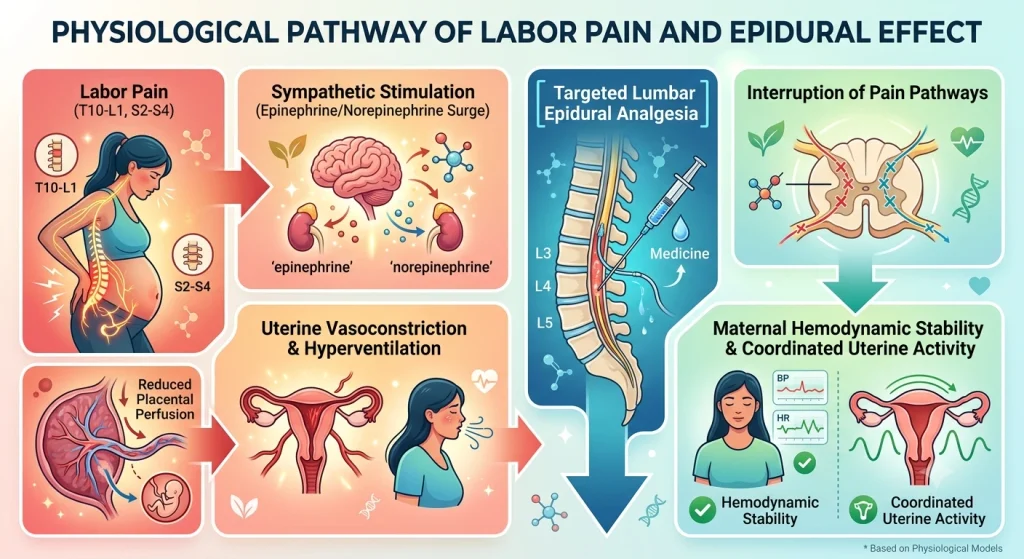
Childbirth pain is a multifaceted neurophysiological process caused by uterine muscle ischemia, cervical distension, and mechanical pressure against maternal pelvic structures. While pain tolerance varies, prolonged, unmanageable labor pain triggers maternal hyperventilation (inducing respiratory alkalosis and shifting the maternal oxygen dissociation curve to the left, which impairs fetal oxygen transfer) and stimulates excess sympathetic catecholamine release, which can lead to uterine artery vasoconstriction and uncoordinated uterine dynamics.
Labor epidural analgesia provides targeted, effective relief, transforming a difficult labor experience into a controlled, empowering, and emotionally fulfilling delivery.
Neurobiology of Labor Pain Pathways
- First Stage Pain (Visceral): Originates from cervical dilation, lower uterine segment stretching, and myometrial ischemia. Afferent sensory nerve fibers travel alongside sympathetic pathways entering the spinal cord at the T10, T11, T12, and L1 dermatomal levels.
- Second Stage Pain (Somatic): Originates from mechanical distension of the lower pelvic floor, vaginal vault, vulva, and perineal skin by the descending fetus. These impulses are transmitted rapidly along the pudendal nerve to the spinal cord segments S2, S3, and S4.
The “Walking Epidural”: Modern Low-Dose Combined Modalities
Historical epidural protocols often used high concentrations of local anesthetics, resulting in profound motor blockade that left mothers with heavy, paralyzed legs and diminished bearing-down reflexes during the pushing phase.
At Rose Hospital, advanced low-dose, motor-sparing epidural analgesia is standard:
- Pharmacological Formulation: Ultra-low concentrations of local anesthetics (e.g., 0.0625% to 0.1% Ropivacaine or Bupivacaine) combined with lipophilic opioids (e.g., Fentanyl 2 mcg/mL).
- Differential Nerve Blockade: This combination selectively blocks the unmyelinated C-fibers and thin A-delta fibers responsible for transmitting visceral pain, while sparing the thick, myelinated A-alpha and A-beta motor fibers.
- Maternal Autonomy: The mother remains conscious and retains full motor control over her lower limbs. She can change positions in bed, sit upright, and maintain the natural urge to push during the second stage.
Step-by-Step Clinical Procedure: How an Epidural is Administered
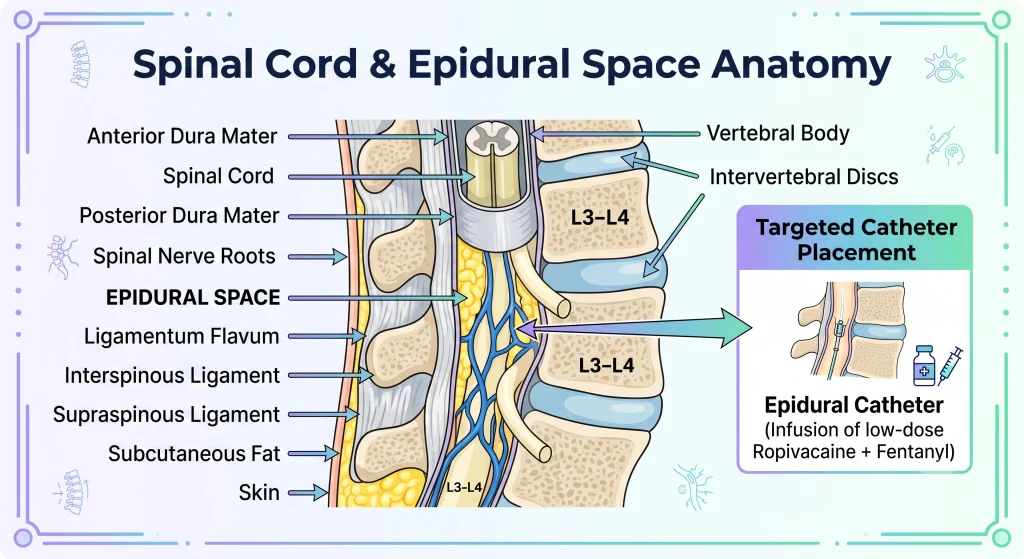
- Pre-Procedure Assessment & Hydration: A baseline cardiovascular profile, platelet count, and fetal heart rate trace are confirmed. Intravenous access is verified, and a modest crystalloid infusion is initiated to maintain hemodynamic stability.
- Maternal Positioning: The mother sits on the edge of the delivery bed with her chin tucked to her chest and back gently curved (or assumes a left lateral decubitus position), opening the intervertebral spaces.
- Local Asepsis and Anesthesia: The lumbar field (L3–L4 or L4–L5) is prepped with chlorhexidine and draped. A small volume of 2% lignocaine is infiltrated intradermally to numb the skin completely.
- Tuohy Needle Insertion: A specialized, blunt-beveled Tuohy needle is advanced slowly through the supraspinous ligament, interspinous ligament, and ligamentum flavum.
- Loss-of-Resistance (LOR) Verification: Entry into the epidural space is confirmed via the loss-of-resistance to saline or air technique, ensuring the dura mater has not been breached.
- Micro-Catheter Placement: A soft, flexible micro-catheter is threaded through the needle into the epidural space, and the needle is withdrawn.
- Test Dosing & Titrated Infusion: A test dose is administered to rule out accidental intravascular or subarachnoid placement. Once verified, continuous low-dose analgesia is initiated via an automated infusion pump, typically taking full effect within 10 to 15 minutes.
4. Evidence-Based Myth Busting: Safety of Labor Analgesia
Misinformation often causes expectant mothers unnecessary anxiety about choosing labor analgesia. Decades of prospective randomized trials and meta-analyses from organizations like the American College of Obstetricians and Gynecologists (ACOG) clarify these safety profiles:
Myth 1: “Epidurals cause chronic, lifelong back pain.”
- The Scientific Evidence: Extensive randomized controlled trials have followed thousands of women postpartum, comparing those who received labor epidurals against those who chose unmedicated births. The data consistently demonstrates no statistically significant difference in long-term backache between the two cohorts. Postpartum back discomfort is usually muscular in origin, caused by pregnancy-related center-of-gravity shifts, lumbar lordosis, pelvic joint relaxation from the hormone relaxin, and repetitive lifting and nursing of the infant.
Myth 2: “Getting an epidural dramatically increases the risk of an emergency Cesarean section.”
- The Scientific Evidence: Multiple large-scale Cochrane Systematic Reviews involving over 11,000 laboring women have confirmed that modern low-dose epidural analgesia does not increase the risk of Cesarean delivery. Epidural administration does not slow the active phase of labor when managed properly. While it may extend the second (pushing) stage by an average of 15 to 30 minutes due to subtle sensory changes, this extension carries no adverse maternal or fetal clinical consequences.
Myth 3: “The medications will pass into the baby and cause respiratory depression or sluggishness.”
- The Scientific Evidence: Unlike systemic intravenous opioids (such as pethidine or tramadol), which cross the placental barrier in high concentrations and can induce transient neonatal respiratory depression, an epidural operates locally. The low-dose anesthetics and lipophilic opioids bind predominantly to maternal spinal nerve roots within the epidural space. Systemic maternal absorption is minimal, resulting in negligible fetal transfer. Apgar scores and neurobehavioral assessments of infants born via painless delivery mirror those born without analgesia.
5. Comprehensive Birthing Modalities: A Comparative Matrix
Expectant mothers at Rose Maternity and Children Hospital review all available delivery options during antenatal visits so they can construct an informed, personalized birthing plan.
| Clinical Parameter | Spontaneous Unmedicated Normal Delivery | Painless Normal Delivery (Low-Dose Epidural) | Planned / Emergency Cesarean Section |
| Primary Indication | Physiological labor progression without obstetric complications | Parturient request for pain relief; maternal hypertension; cardiac disease | Cephalopelvic disproportion, placenta previa, transverse lie, acute fetal distress |
| Pain Level Experienced | Significant visceral and somatic pain throughout labor | 80%–95% pain reduction; pressure sensations remain intact | Completely eliminated intraoperatively under spinal/general anesthesia |
| Maternal Consciousness | Fully alert and active | Fully alert, calm, interactive, and autonomous | Fully alert (under spinal); unconscious (under general) |
| Physical Mobility | Complete freedom of movement and ambulation | Maintained leg motor control; ability to sit and shift bed positions | Immobilized in bed for 12 to 24 hours post-operatively |
| Average Hospital Stay | 24 to 48 hours | 24 to 48 hours | 72 to 96 hours |
| Postpartum Recovery | Immediate return to gentle daily activities | Immediate return to gentle daily activities | 2 to 6 weeks for full deep-tissue abdominal healing |
| Breastfeeding Initiation | Immediate (within 30 minutes of birth) | Immediate (within 30 minutes of birth) | Can be delayed due to recovery room stabilization or incisional pain |
| Future Pregnancy Impact | Preserves an unscarred uterus; low risk for subsequent births | Preserves an unscarred uterus; low risk for subsequent births | Increases risks of uterine rupture, placenta accreta spectrum, and repeat C-sections |
6. Non-Pharmacological Labor Support and Pain Modulation
Complementing pharmacological techniques, our labor suites incorporate non-invasive comfort methods that help soothe the central nervous system, boost natural endorphins, and promote fetal descent.
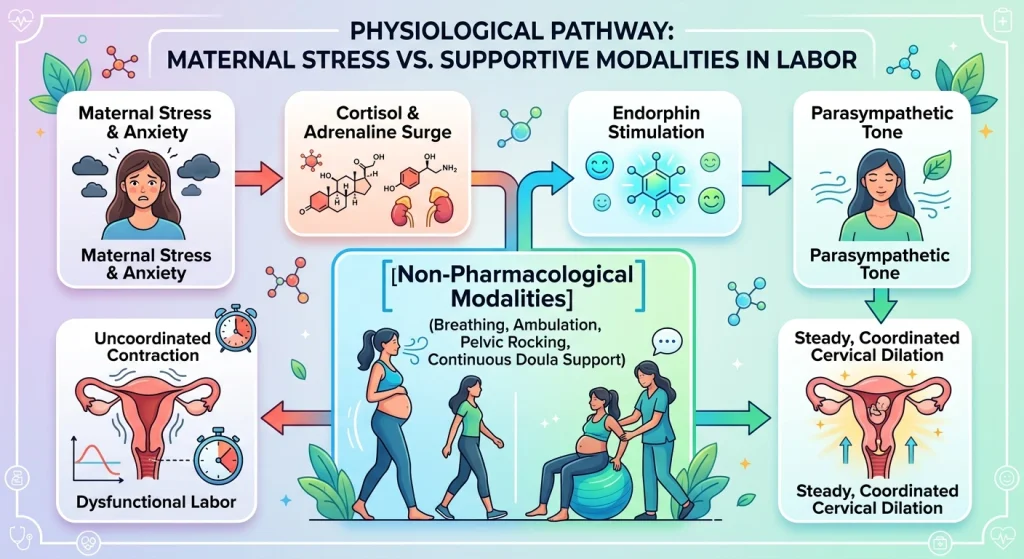
- Continuous One-to-One Labor Support: Our experienced obstetrics nursing team provides continuous bedside emotional guidance, comfort measures, and encouragement throughout the labor process.
- Physiological Mobility and Pelvic Positioning: Expectant mothers are encouraged to remain upright and mobile during early and active labor. Utilizing birthing balls, rocking pelvis techniques, and modified squatting expands the pelvic outlet diameters by up to 2 cm, using gravity to encourage optimal fetal head alignment (occiput anterior).
- Controlled Hydro-Comfort: Warm water compresses and directed hydro-therapy against the lumbosacral region provide soothing counter-stimulation, modulating nociceptive sensory input at the spinal cord level based on the Gate Control Theory of pain.
- Paced Diaphragmatic Breathing: Guided, rhythm-paced breathing prevents rapid hyperventilation, optimizing maternal-fetal oxygen exchange and keeping the pelvic floor musculature relaxed between contractions.
7. High-Risk Labor Safety Infrastructure & Emergency Readiness
A commitment to normal childbirth must always be backed by immediate emergency readiness. True maternal safety requires a clinical environment where potential labor complications can be identified early and treated without delay.
Continuous Electronic Fetal Monitoring (Cardiotocography – CTG)
Every labor bed at Rose Hospital is equipped with computerized dual-channel Cardiotocography. Our clinical team continuously assesses:
- Baseline Fetal Heart Rate (FHR): Normal physiological parameters maintained between 110 and 160 beats per minute.
- Baseline Beat-to-Beat Variability: Confirming healthy fetal central autonomic neurological oxygenation (normal: 6 to 25 bpm).
- Deceleration Analysis: Differentiating benign early decelerations (fetal head compression) from late decelerations (uteroplacental insufficiency) or variable decelerations (umbilical cord compression), enabling timely interventions before fetal compromise occurs.
Seamless Operative Conversion (The “Decision-to-Delivery” Window)
When unpredictable obstetric emergencies arise—such as acute placental abruption, sustained fetal bradycardia, umbilical cord prolapse, or refractory cephalopelvic disproportion—our facility maintains a Decision-to-Delivery Interval (DDI) that meets and exceeds international standards:
- Immediate Surgical Readiness: Fully operational, sterile surgical suites located adjacent to our labor rooms.
- 24/7 Multi-Disciplinary On-Site Presence: A resident obstetric team, consultant anesthesiologist, and neonatologist on site around the clock, allowing rapid surgical transition within minutes when necessary.
Comprehensive Neonatal Pediatric Integration
A successful delivery requires expert care for the newborn as well. The pediatric team at Rose Hospital provides:
- Immediate Golden-Hour Neonatal Resuscitation: Fully equipped infant warmers, continuous T-piece resuscitators, and pulse oximetry stationed directly within the labor suites.
- Kangaroo Mother Care (KMC) Promotion: Providing continuous skin-to-skin contact to help maintain normal infant body temperature, stabilize blood glucose levels, and colonize the newborn’s skin with maternal flora.
- Lactation Support: Dedicated infant feeding specialists to assist with latching, positioning, and overcoming early breastfeeding challenges before hospital discharge.
8. Clinical Leadership: Dr. Vidya Lakshmi Kachhela
The cornerstone of maternal care at Rose Maternity and Children Hospital is the clinical expertise and dedicated philosophy of its founder and Chief Obstetrician:
Academic Credentials & Clinical Experience
- Undergraduate & Postgraduate Qualifications: M.B.B.S., M.D. in Obstetrics & Gynaecology.
- Specialized Expertise: Advanced labor management, complex operative vaginal deliveries, physiological birth planning, and high-risk pregnancy management (including gestational diabetes, severe pre-eclampsia, twin gestations, and previous-cesarean birth trials/VBAC).
- Professional Affiliations: Active member of the Federation of Obstetric and Gynaecological Societies of India (FOGSI) and the Bharuch Obstetrics & Gynaecological Society.
A Philosophy of Conservative, Patient-Centered Obstetrics
Dr. Kachhela believes that while surgical interventions are life-saving tools when indicated, the primary role of an obstetrician is to support natural physiological labor safely:
- Promoting Spontaneous Birthing: Avoiding unnecessary labor inductions or artificial augmentations without clear medical indications.
- Advocating for Vaginal Birth After Cesarean (VBAC/TOLAC): Carefully evaluating uterine scar integrity and maternal pelvic parameters to support suitable candidates seeking a vaginal delivery after a prior C-section.
- Compassionate Bedside Demeanor: Dr. Kachhela is known for her calm, reassuring presence in the labor room, ensuring that mothers and their families feel informed, respected, and involved in every clinical decision.
9. 100% Cashless Maternity Admissions and TPA Assistance
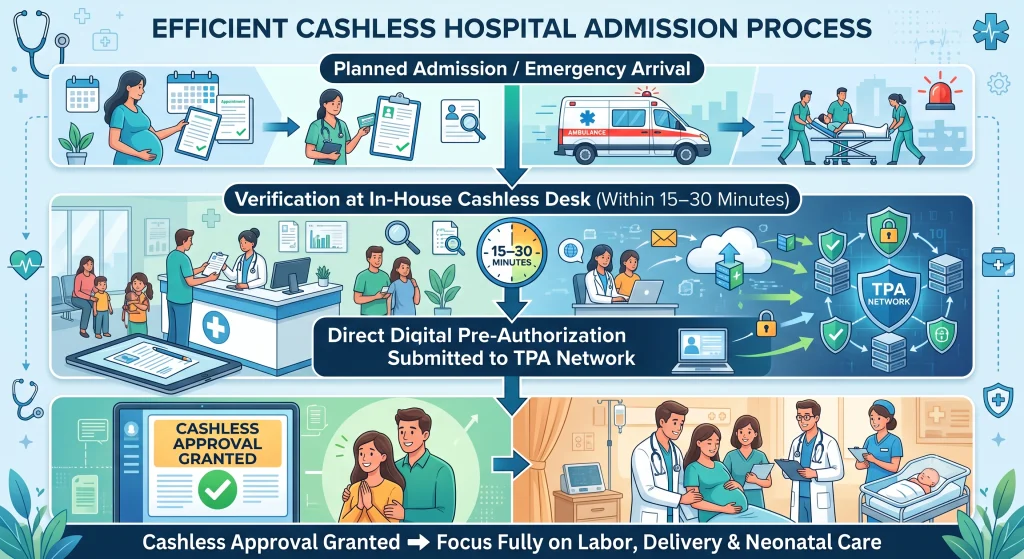
Navigating medical insurance during labor should never add stress to an expectant family. Rose Maternity and Children Hospital is a verified cashless facility, fully empaneled with India’s leading insurance providers and Third-Party Administrators (TPAs).
Empaneled Networks & TPA Partners
Our in-house administrative desk coordinates directly with major health insurance networks, including:
- HDFC ERGO General Insurance
- Care Health Insurance (Religare)
- SBI General Insurance
- Medi Assist TPA
- Star Health & Allied Insurance
- ICICI Lombard General Insurance
- Niva Bupa Health Insurance (Max Bupa)
- Vidal Health TPA / Paramount TPA / Heritage Health
Transparent, Hassle-Free Admission Protocol
- Antenatal Pre-Authorization: Expectant parents can present their health insurance policy card, government ID, and preliminary antenatal records to our TPA desk around the 34th to 36th week of pregnancy for early document verification.
- Emergency Paperwork Handling: If labor begins unexpectedly, our dedicated helpdesk initiates instant pre-authorization processing, allowing the family to focus entirely on maternal comfort and birth.
- Comprehensive Cost Transparency: We maintain clear, itemized maternity packages covering room accommodations, nursing care, delivery room charges, labor analgesia, and initial newborn screening, eliminating unexpected expenses at discharge.
10. Trimester-by-Trimester Preparation for a Normal Delivery
Achieving a healthy normal delivery begins with proactive antenatal care. A structured medical regimen across all three trimesters prepares the maternal body for the physical demands of labor:

First Trimester (Weeks 1 to 12): Setting the Foundation
- Nutritional Support: Early folic acid supplementation (5 mg daily) to prevent neural tube defects, paired with balanced macro-nutritional counseling to manage morning sickness and maintain healthy blood sugar levels.
- Comprehensive Clinical Screening: Baseline complete blood counts, thyroid profiles, blood grouping, Rh typing, viral markers, and early viability ultrasounds.
Second Trimester (Weeks 13 to 28): Pelvic Preparation & Muscle Conditioning
- Targeted Physical Conditioning: Initiating supervised antenatal yoga, gentle stretching, and daily 30-minute walks to build cardiovascular stamina and pelvic muscle elasticity.
- Pelvic Floor Muscle Training (Kegels): Strengthening and learning to consciously relax the pubococcygeus and levator ani muscles to facilitate smooth fetal head descent during labor.
- Nutritional Supplementation: Initiating elemental iron and calcium supplementation to support fetal bone development and prevent maternal gestational anemia.
Third Trimester (Weeks 29 to 40): Final Preparation & Birth Planning
- Perineal Massage (From 34 Weeks): Daily gentle massage of the perineal tissue using sterile, natural oils to improve local blood flow and tissue elasticity, reducing the likelihood of natural tears during delivery.
- Optimal Fetal Positioning Exercises: Practicing forward-leaning postures, sitting on birth balls, and avoiding prolonged semi-reclined sitting to encourage the baby into an occiput anterior position.
- Recognizing True vs. False Labor: Learning to differentiate between regular, progressively intensifying labor contractions and benign Braxton-Hicks contractions.
11. Frequently Asked Questions (FAQs)
What distinguishes a painless delivery from a traditional normal delivery?
A painless delivery is fundamentally a normal vaginal delivery carried out with specialized labor analgesia. A low-dose continuous lumbar epidural is administered by an experienced anesthesiologist once labor is established. It selectively blocks visceral and somatic pain pathways while preserving the mother’s ability to move her legs, feel pelvic pressure, and push her baby out naturally.
How do I know if I am an ideal candidate for a normal delivery?
The majority of women with a singleton pregnancy and a head-down (cephalic) baby are natural candidates for normal delivery. During your regular antenatal visits at Rose Hospital, Dr. Vidya Lakshmi Kachhela evaluates pelvic architecture (clinical pelvimetry), tracks fetal growth, and monitors placental location to ensure vaginal birth is safe for both mother and child.
Can I have a normal delivery if I had a previous Cesarean section?
Yes. Many women with one prior lower-segment transverse Cesarean delivery are suitable candidates for a Vaginal Birth After Cesarean (VBAC), also referred to as a Trial of Labor After Cesarean (TOLAC). This requires thorough evaluation of the previous uterine scar, confirmed absence of recurrent complications (such as cephalopelvic disproportion), and continuous fetal monitoring in a fully equipped surgical hospital.
What are the early signs that indicate I should head to the hospital immediately?
You should proceed to Rose Maternity and Children Hospital immediately if you experience any of the following signs, day or night:
Rupture of Membranes: A sudden gush or constant trickle of watery fluid from the vagina, regardless of whether contractions have begun.
Regular, Intensifying Contractions: Painful contractions occurring every 4 to 5 minutes, lasting 45 to 60 seconds, and growing consistently stronger.
Vaginal Bleeding: Any bright red bleeding (distinct from a pinkish or mucous “bloody show”).
Decreased Fetal Movements: A noticeable drop in your baby’s daily fetal kick counts or movement patterns.
How soon after a normal delivery can I begin walking and breastfeeding?
Mothers who have an unmedicated or low-dose painless delivery can typically sit up and begin breastfeeding within the “Golden Hour” (the first 30 to 60 minutes) after birth. Gentle walking can resume within 2 to 4 hours post-delivery, once the initial fourth-stage observation period is complete.
Does your hospital support birth companions in the delivery room?
Yes. Evidence confirms that continuous support from a trusted companion lowers maternal anxiety, shortens the active phase of labor, and reduces the need for interventions. We welcome husbands or chosen family members into our private delivery suites to support the mother throughout the birthing process.
12. Contact Rose Maternity and Children Hospital
Whether you are in the early stages of planning a family, looking for dedicated antenatal care, or exploring pain-relief options for childbirth, our team is here to support you with expert, compassionate care.
- Hospital Address: Rose Maternity and Children Hospital,B-42/43, Near ONGC Dispensary, Falshruti Nagar,Moficer Jin Compound, Bharuch, Gujarat – 392001.
- 24/7 Emergency & Maternity Helpline: +91 90999 27095
- Consultation & TPA Inquiries: dr.kachhela@gmail.com
- OPD Timings: Monday to Saturday: 10:00 AM – 1:00 PM & 5:00 PM – 7:00 PM
- (Labor, Delivery & Emergency Admissions available 24 Hours / 7 Days a Week)
13. Scientific References & Clinical Citations
- World Health Organization (WHO). (2018). WHO recommendations: intrapartum care for a positive childbirth experience. Geneva: World Health Organization. Licence: CC BY-NC-SA 3.0 IGO.
- American College of Obstetricians and Gynecologists (ACOG). (2019). ACOG Practice Bulletin No. 209: Obstetric Analgesia and Anesthesia. Obstetrics & Gynecology, 133(3), e208-e225.
- Anim-Somuah, M., Shennan, A. H., & Haslam, L. (2018). Epidural versus non-epidural or no analgesia in labour. Cochrane Database of Systematic Reviews, (5). Art. No.: CD000331.
- Royal College of Obstetricians and Gynaecologists (RCOG). (2020). The Management of Third- and Fourth-Degree Perineal Tears. Green-top Guideline No. 29. London: RCOG.
- Federation of Obstetric and Gynaecological Societies of India (FOGSI). (2021). Good Clinical Practice Recommendations on the Active Management of Third Stage of Labor (AMTSL). Indian Journal of Obstetrics and Gynecology.
- National Health Mission (NHM), Government of India. (2017). LaQshya: Labour Room Quality Improvement Initiative – Operational Guidelines. Ministry of Health and Family Welfare, New Delhi.
- Begley, C. M., Gyte, G. M., Devane, D., McGuire, W., & Weeks, A. (2019). Active versus expectant management for women in the third stage of labour. Cochrane Database of Systematic Reviews, (2). Art. No.: CD007412.
- Sultan, A. H., & Thakar, R. (2017). Perineal repair and episiotomy: Evidence-based techniques. Best Practice & Research Clinical Obstetrics & Gynaecology, 42, 66-79.